CWT-SML Logistics Fireproofing Project in UAE
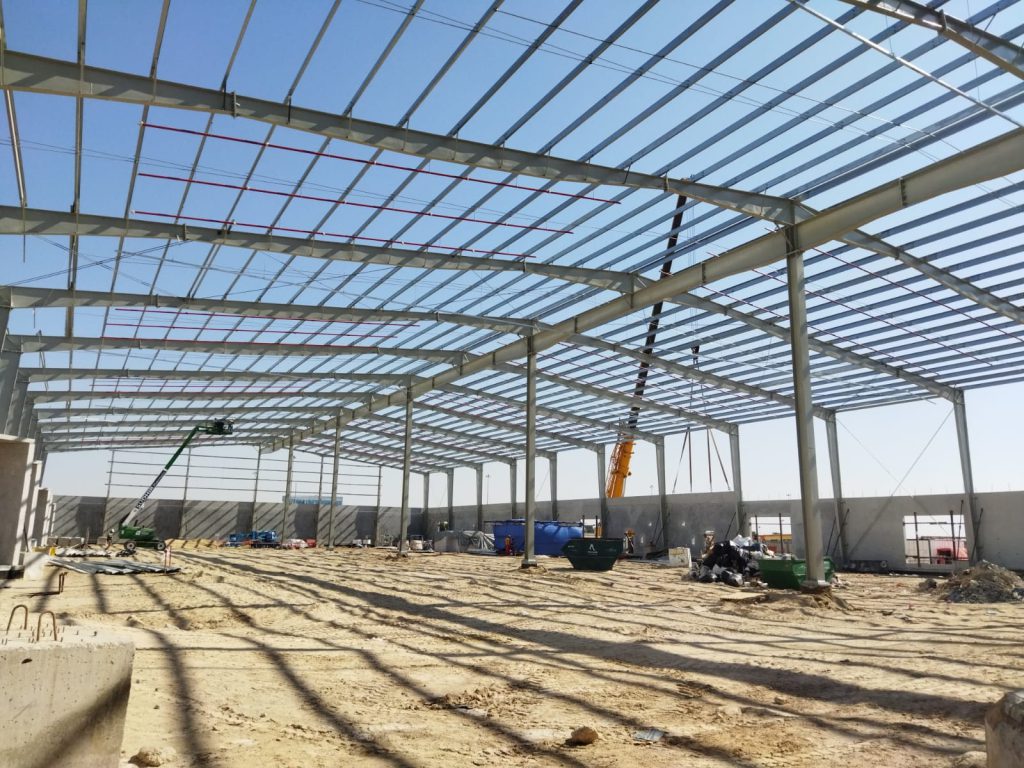
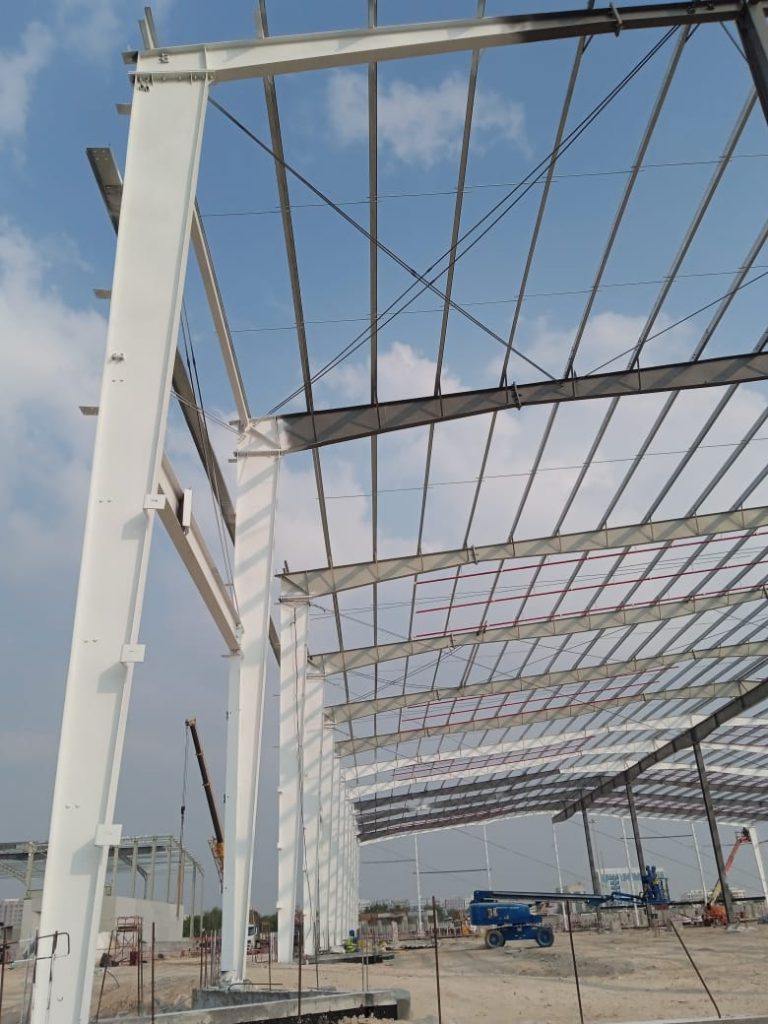
CWT-SML Logistics Fireproofing Dubai South, Dubai: Ibtikar applied Nullifire SC802 Intumescent Coatings across 12,500 m² of structural steel to achieve a 60-minute fire rating, completed in July 2026.
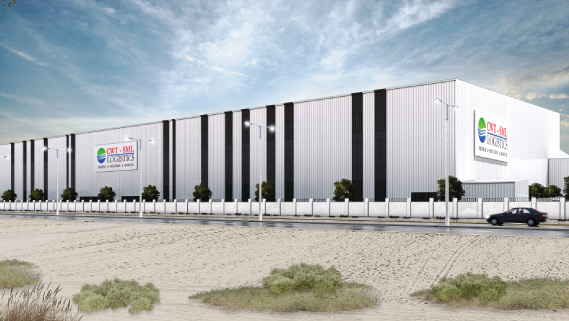
CWT-SML Logistics Fireproofing Dubai South, Dubai: Ibtikar applied Nullifire SC802 Intumescent Coatings across 12,500 m² of structural steel to achieve a 60-minute fire rating, completed in July 2026.
Project Type Intumescent Coatings
LocationDubai South, Dubai
Area12,500 m²
Fire Rating60-minute
MaterialNullifire SC802
CompletionJuly 2026
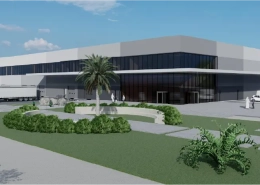
The CWT-SML Logistics is an Intumescent Coatings project located in Dubai South, Dubai, UAE, where Ibtikar delivered professional structural steel fireproofing and passive fire protection solutions for CWT-SML Logistics LLC. Covering approximately 12,500 m² of steelwork, the project was completed in July 2026 using Nullifire SC802 via airless spray fireproofing, selected to provide reliable protection in accordance with the specified 60-minute fire-resistance requirement.
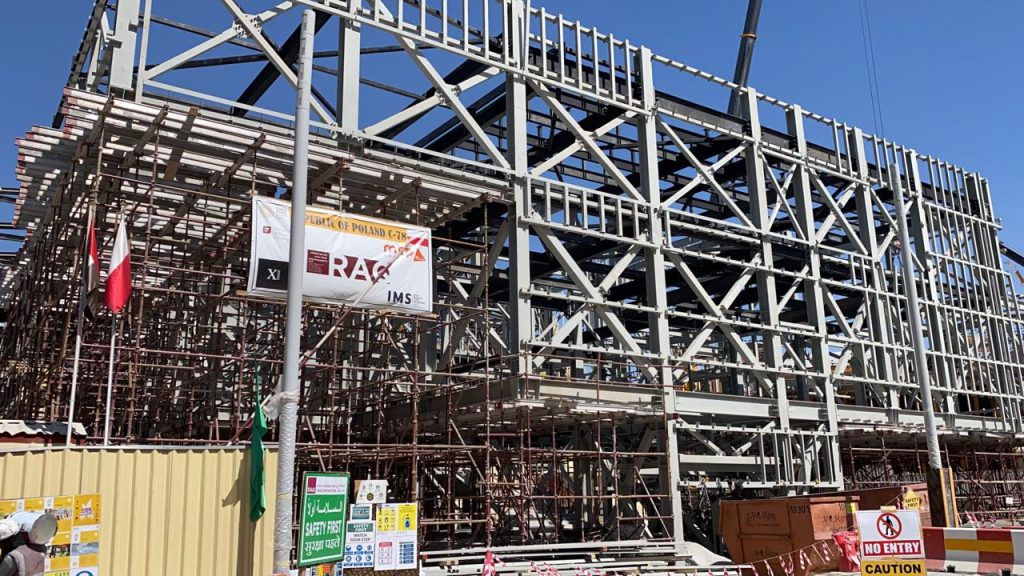
Ibtikar’s scope included the application of the fireproofing system to primary and secondary structural steel members such as columns, beams, connections, and other critical steelwork. Our team strictly managed surface preparation, primer compatibility, coating application, and dry film thickness (DFT) verification at every stage. All fireproofing activities were executed in accordance with approved project requirements, manufacturer recommendations, and applicable UAE passive fire protection and Civil Defense requirements.
Through controlled application and systematic quality inspections, Ibtikar delivered a durable, fully compliant, and properly documented fireproofing system engineered to preserve the structural integrity of the building during fire exposure.
Explore more Ibtikar projects or contact our team to learn about our structural steel fireproofing, intumescent coating, and passive fire protection services across the UAE and GCC.

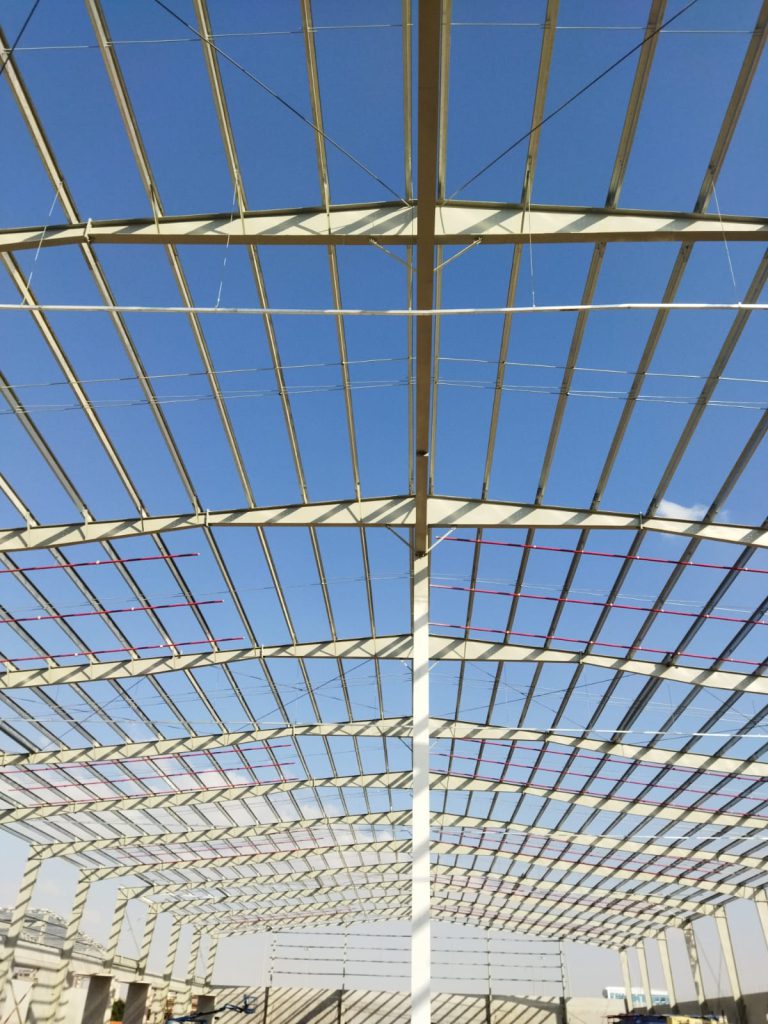
Primary and secondary structural steel members — columns, beams and connections — are protected against fire exposure to maintain load-bearing capacity for the required fire-resistance period, in line with the project's passive fire protection strategy.
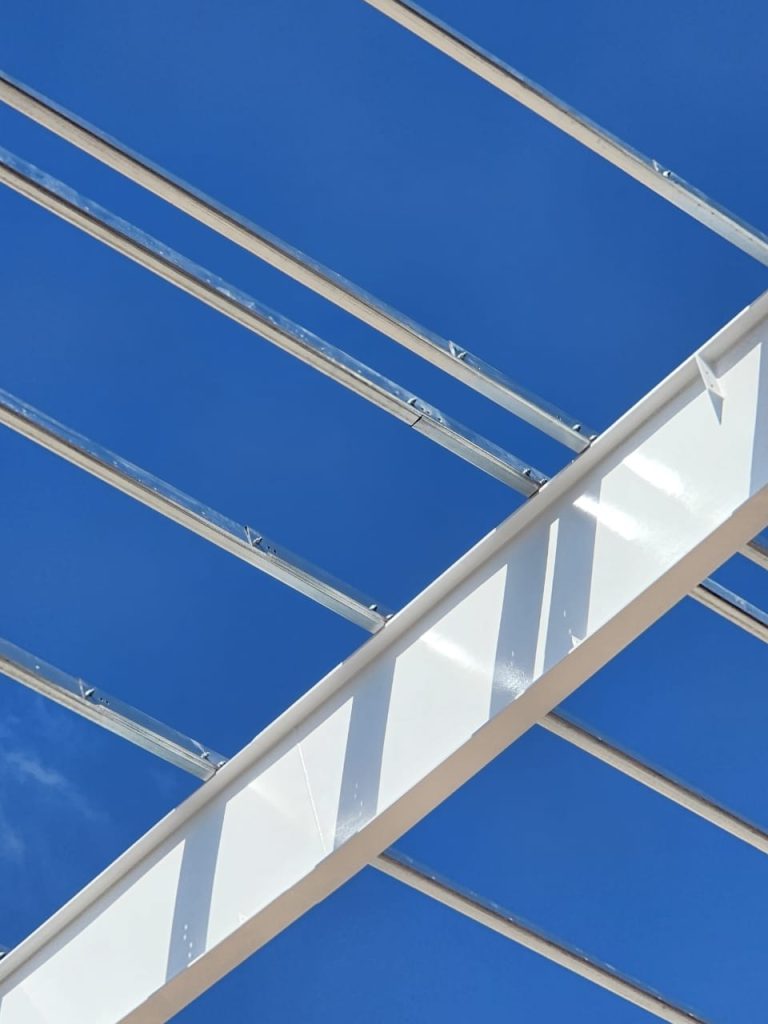
A reactive intumescent coating system is applied to prepared steel surfaces. Under fire exposure, the coating expands to form an insulating char layer that slows the rate of heat transfer to the substrate, delaying loss of structural strength.
Dry film thickness (DFT) is measured throughout application against the specified coating build-up. Each stage is documented with inspection records, culminating in a final walk-through and sign-off prior to handover.
A layered coating system builds up fire resistance on the steel substrate. Products and film thicknesses are project-specific — see the technical documents below.
Prepared structural steel, cleaned and profiled to the specified surface standard prior to coating.
A compatible primer system protects the substrate and provides adhesion for the intumescent coating. Thickness per specification.
The reactive fireproofing coating, applied to the dry film thickness specified for the project's required fire-resistance rating, from 60 up to 120 minutes. Under fire exposure it expands to form an insulating char layer.
A protective topcoat is applied where specified, for UV resistance, weathering or a decorative finish.
Each layer depends on the one beneath it — primer adhesion determines how well the intumescent coating bonds to the steel, and the specified dry film thickness is what delivers the certified fire-resistance rating. Products and film thicknesses are project-specific: always confirm against the data sheets and the approved project specification before application.
Surface preparation and primer sign-off come first for a reason — an intumescent coating applied over contaminated or incorrectly primed steel can fail to adhere, and that is found out long after the steel has been closed in. The DFT records are the evidence: the fire-resistance rating is only as good as the film thickness actually achieved on each member, which is why the readings are taken point by point and kept with the handover file.
12,500 m²Protected Area
60-minuteRequired Fire Rating
Intumescent Coatings Coating System
CompletedProject Status
Approved 100%Inspection Status

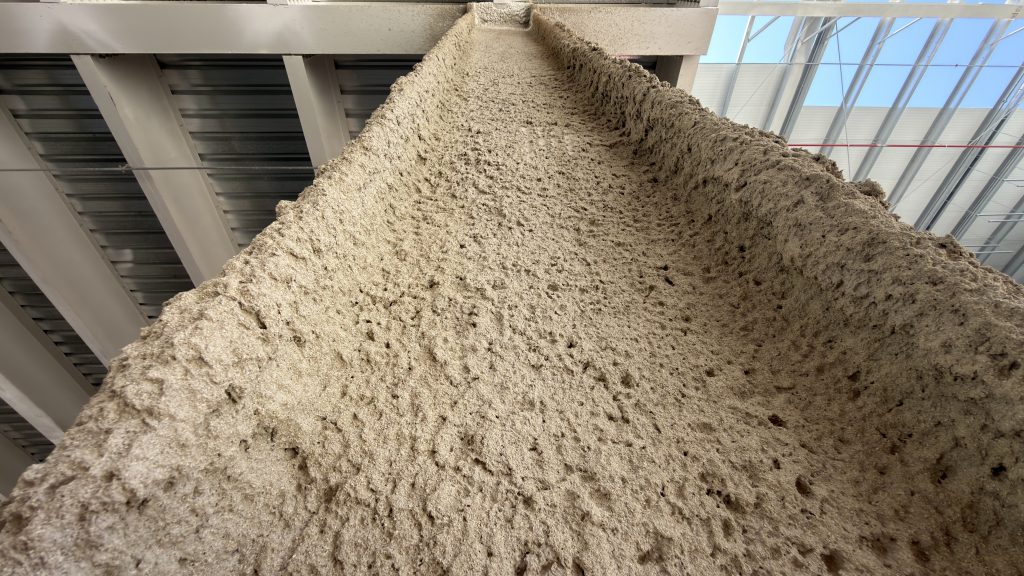


Fire Proofing Material
Certifire CF5365 & BS 476 Part 21 Certified Passive Fire Protection for Structural Steelwork. High-build single-coat application up to 1200 µm WFT.
Source: Nullifire SC801 Technical Data Sheet (Tremco CPG), tested to BS 476: Part 21: 1987. A single "max DFT per coat" figure isn't published separately — coverage is quoted theoretically at 1.00 mm DFT.
Times shown are recoat intervals at 20°C and vary with temperature and humidity — confirm with Nullifire for your site conditions.
All four links are placeholders — I couldn't find an SC801 sheet hosted on ibtikar-uae.com (only on Nullifire's own site), so point these at your own media-library copies once you confirm them.
Fire Proofing Material
BS 476 & Certifire CF5420 Certified Passive Fire Protection for Internal Structural Steelwork. Optimized single-coat application for 60-minute cellulosic fire resistance.
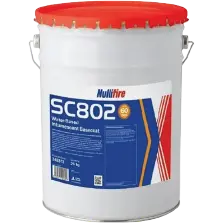
Source: Nullifire SC802 Technical Data Sheet (Tremco CPG), tested to BS 476: Parts 20/21. Your catalog page also mentions a "limited 90-minute option" — this data sheet only confirms 60 minutes, so verify the 90-minute claim before publishing.
Times shown are recoat intervals at 20°C and vary with temperature and humidity — confirm with Nullifire for your site conditions.
All four links are placeholders. Note: an SC802 Safety Data Sheet is already hosted on your Saudi site (ibtikar-saudi.com) — happy to link that or your own UAE media-library copy once you confirm which to use.
Fire Proofing Material
EN 13381 & CE Certified Passive Fire Protection for Structural Steelwork. Ultra-low VOC formulation optimized for 60-minute fire resistance, with a limited 90-minute option available.
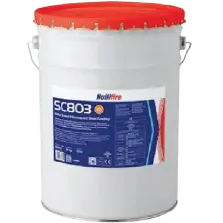
Source: Nullifire SC803 Technical Data Sheet (Tremco CPG). Rating is optimised for 60 minutes — the 90-minute figure is a limited option, not the primary rating.
Handle time varies with site conditions. Times shown are at 20°C — confirm with Nullifire for your site conditions.
Note: unlike SC801/SC802/SC804, this data sheet does not reference BS 476 or Certifire — SC803's certification family is the EN 13381 series plus ETA/CE.
All four links are placeholders — point them at your own hosted files once confirmed.
Fire Proofing Material
BS 476 & Certifire CF5929 Certified Passive Fire Protection for Structural Steelwork. High-build formulation optimized for 90-minute fire resistance, with a limited 120-minute option available.
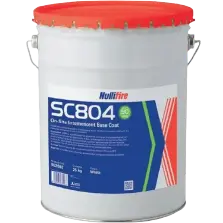
Source: Nullifire SC804 Technical Data Sheet (Tremco CPG). Rating is optimised for 90 minutes — the 120-minute figure is a limited option, not the primary rating. No single max-DFT figure is published, so coverage is shown at its theoretical reference thickness instead.
Recommended overcoat time is 16 hours. Drying times also vary by temperature (e.g. 1.0mm WFT takes 6h at 10°C, 3h at 30°C) — the figures above are the 20°C reference column.
All four links are placeholders — point them at your own hosted files once confirmed.
Fire Proofing Material
Spray-Applied, Asbestos-Free Fire Resistive Material for Interior Structural Steel. Mineral Wool-Free, Styrene-Free Formulation Backed by 40+ UL Fire-Resistance Designs.

Sources: Carboline regional product pages and a technical specification guide. Carboline's official TDS PDF is blocked to automated access (robots.txt), so I couldn't confirm VOC, pack size, or the exact thickness-per-hour-rating chart — send the PDF if you have a copy and I'll fill those in with real numbers.
Figures are at 70°F (21°C) — confirm with Carboline for other site conditions.
I did not find an explicit ASTM E119 citation in the sources checked — UL Design listings are based on this test method, but confirm the exact standard reference with Carboline before publishing.
All four links are placeholders — point them at your own hosted files once confirmed.
Fire Proofing Material
Fast-Drying Two-Component Coating for Direct-to-Metal Application in C1–C3 Environments. Outstanding UV and Gloss Retention for Long-Term Exterior Performance.
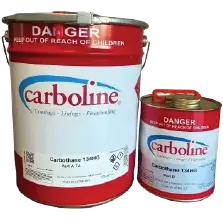
Sources: Carboline regional product page (environment, UV/gloss) and the Carbothane 137HS Part A Safety Data Sheet already hosted on your own site (VOC content). Carboline's official TDS PDF is blocked to automated access (robots.txt) — I could not pull volume solids, DFT or pack size from it. If you can download it from your Carboline rep or account, send it over and I'll fill in the rest with real numbers instead of leaving them blank.
Specific tack-free, recoat and full-cure times were not published in the sources I could access for this product — Carboline's official data sheet is blocked to automated fetching. Confirm with Carboline or your TDS copy before publishing exact hours.
The Part A SDS link above is already live on your own site. The other three are placeholders — point them at your hosted TDS / Part B SDS / certificate once confirmed.
Fire Proofing Material
Up to 4-Hour Fire Protection Across 100+ UL Designs. Lightweight spray-applied formula with a rapid 15–20 minute recoat option using Accelerator A-20.
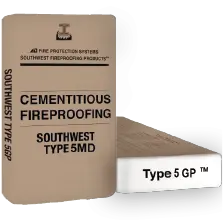
Source: Southwest Type 5GP Product Data Sheet (Carboline/Southwest Fireproofing). Type 5GP is the general-purpose grade of the Type 5 family, formulated as a lower-density, standard-purpose alternative to Type 5MD.
The Accelerator A-20 option is a distinguishing feature of Type 5GP for fast-turnaround schedules. Figures are at 77°F (25°C) — confirm with Southwest/Carboline for other site conditions.
All four links are placeholders — point them at your own hosted files once confirmed.
Fire Proofing Material
Up to 4-Hour UL-Listed Fire Protection for Structural Steel. Spray-applied, high-bond-strength formula rated for 100+ UL assemblies.
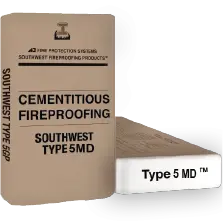
Source: Southwest Type 5MD Product Data Sheet (Carboline/Southwest Fireproofing). Bond strength is tiered by installed density: >3,000 psf @ 22 pcf, >1,000 psf @ 16.5 pcf, >430 psf @ 15 pcf — UL designs require a 15/14 pcf minimum.
Figures are at 77°F (25°C) — confirm with Southwest/Carboline for other site conditions.
All four links are placeholders — point them at your own hosted files once confirmed.
A track record of fireproofing delivered across the UAE's industrial, commercial and infrastructure sectors.
Dedicated focus on passive fire protection and intumescent coating systems for structural steel.
Documented dry film thickness inspection and quality checks at every stage, issued as a signed inspection report.
Technical guidance from specification and system selection through to inspection, handover and authority submission.
What type of fireproofing was used on this project?
This project used a Nullifire SC802 intumescent coating system, specified to deliver a 60-minute fire-resistance rating on exposed structural steel.
How is intumescent coating applied to structural steel?
Steel is first cleaned and primed, then the intumescent coating is applied in controlled passes — by spray, brush or roller depending on the product and site conditions — to build up the specified dry film thickness.
How is the required fire-resistance rating determined?
The required rating is set by the project’s fire strategy and applicable building regulations, based on factors such as building use, height and occupancy. This determines the fire-resistance period the steelwork must achieve.
How is dry film thickness (DFT) inspected?
DFT is measured using a calibrated gauge at multiple points across each member and recorded against the thickness specified for the required fire rating, with results documented for inspection.
What factors affect intumescent coating thickness?
Coating thickness depends on the steel member’s section factor (Hp/A), the required fire-resistance period, and the specific product’s certified performance data.