Fabric Fire-Retardant Treatment for Curtains, Upholstery and Textiles

Certified flame-retardant treatment for curtains, upholstery, tents and wall coverings — tested to NFPA 701 and BS 5852, with a certificate of flame resistance issued for Civil Defence submission.
Approved

Approved by UAE Civil Defense and trusted by contractors

Mechanism

What it is and how it works

Cementitious fireproofing is a cement- or gypsum-based mortar sprayed onto structural steel. Unlike intumescent paint it does not react or expand — it protects by sheer thickness and very low thermal conductivity, holding the steel below the temperature at which it starts to lose strength.

  • NFPA 701The standard drapes are judged by
  • Not permanentTreatment washes out with cleaning
  • Test patch firstColour and handle can change

What it is

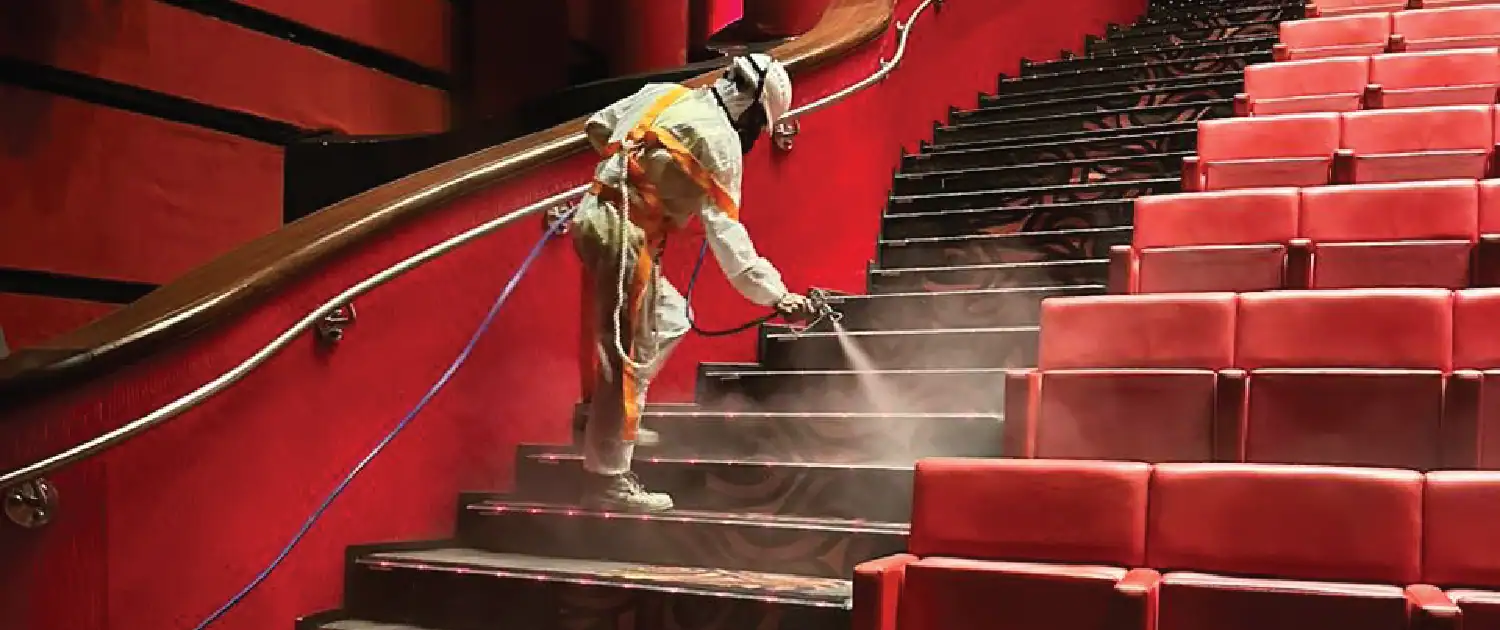
  • A treatment, not a fabric Applied by spray or immersion to textiles you already own or have already specified — so the design intent survives the fire requirement.
  • Different from inherently FR fabric Inherent fabrics carry fire resistance in the fibre itself and keep it for life. A topical treatment sits on the fibre, which is why it costs less and why it does not last forever.
  • It comes off in the wash Laundering, dry cleaning and heavy soiling strip the treatment. Once fabric has been cleaned it is no longer compliant until it is treated again.
  • The fibre decides the chemistry Cotton and other naturals take treatment readily. Polyester and some synthetics need a specific formulation and do not all respond the same way — which is why we patch-test before quoting a whole order.

How it works

  1. Ignition reaches the fabric A flame, a cigarette or radiant heat contacts the treated surface.
  2. The treatment reacts first It decomposes ahead of the fibre, releasing gases and forming char where the flame is touching.
  3. Propagation stops The flame front has nothing to run into, so fire does not travel across the surface or up the drop of a curtain.
  4. It self-extinguishes Remove the ignition source and burning stops. Afterflame time and char length staying inside the limits is precisely what the standard measures.

Specification

Fire ratings and coating thickness

What is being treated Tested to What the test actually measures
Curtains and drapes NFPA 701 · BS 5867-2 Flame spread, afterflame time and char length on a hanging sample.
Upholstery and seating BS 5852 · EN 1021-1/-2 Whether the assembly ignites from a smouldering cigarette and from a match flame.
Tents, shade and marquees NFPA 701 large scale Flame propagation on heavyweight and coated fabric.
Field verification NFPA 705 A small vertical burn test an inspector can run on fabric already installed.

Different products are judged by different standards — a drape certificate says nothing about a sofa. Note that ASTM D6413 is a test method rather than a compliance standard, and is often quoted where NFPA 701 is what an authority actually wants. The deliverable is the certificate of flame resistance, issued against the fabric we treated and the standard it was tested to — that is the document Civil Defence asks for. Send us a sample and we will patch-test it, confirm the standard and price the order.

Range

Systems we apply

On site

How we apply it

  1. Step 01

    Sample and patch test

    • Fibre identified and the required standard confirmed
    • A patch treated first to check colour and handle
    • Result decides the chemistry — and whether treatment suits the fabric at all
  2. Step 02

    Preparation

    • Fabric clean and dry, free of dust and soiling
    • Items taken down, or fixed items and surroundings masked
  3. Step 03

    Treatment

    • Spray or immersion at the application rate the fabric needs
    • Even saturation across the full area, hems and linings included
    • Dried fully before rehanging
  4. Step 04

    Verification and certificate

    • Field burn test to NFPA 705 where the authority asks for it
    • Certificate of flame resistance issued against the treated fabric
    • Records ready for Civil Defence submission

The patch test comes first for a reason — fibre type decides whether a treatment will take, and treating a full order before checking colourfastness is how a client ends up with compliant curtains they will not hang. Re-treatment is required after cleaning: laundering removes the treatment, and the certificate lapses with it.

Applications

Where Cementitious Coating is used

Intumescent coatings are used as passive fire protection on structural elements — steel, timber and concrete — to delay structural collapse and hold escape routes open during a fire.

Textiles we treat

  • Curtains and drapesWindow treatments, stage curtains and room dividers — the largest area of exposed textile in most buildings.
  • Upholstery and seatingLounge furniture, banquette seating and fixed auditorium seats, judged by ignitability rather than flame spread.
  • Tents, shade and marqueesEvent structures and outdoor canopies, where authorities usually ask for large-scale NFPA 701.
  • Wall coverings and acoustic panelsFabric-wrapped panels and hangings, which behave as a wall lining rather than a textile.

Where it is required

  • Hotels and hospitalityGuest rooms, ballrooms and lobbies, where soft furnishings cover large areas and are replaced often.
  • Theatres and event venuesStage drapes, masking and blackout, historically the first textiles any fire code addressed.
  • Malls, retail and exhibitionsFit-outs and temporary stands, where approval is needed quickly and the fabric is already bought.
  • Schools, hospitals and public buildingsOccupancies where the authority inspects soft furnishings as part of the fire strategy.

Portfolio

Recent fireproofing work

A record of steel protected, inspections passed, and deadlines met across the Emirates.

Why us

Why contractors specify Ibtikar

  • Certified applicators

    Manufacturer-trained crews using our own spray equipment. The people on your site are ours, not subcontracted labour.

  • UAE and GCC

    Offices in Dubai, Abu Dhabi, Sharjah, Ras Al Khaimah and Umm Al Quwain — plus a Saudi operation, so we mobilise across the region without travel loading the price.

  • Approvals already in place

    Dubai, Abu Dhabi and Sharjah Civil Defence, plus ADNOC, CMW, PGC and Tawazun. See our approvals

  • Documented handover

    Dry film thickness recorded member by member, issued with material certificates and test reports, ready for authority submission.

FAQs

Answers on curing time, retrofits, documentation, and Civil Defense approval scope.

  • Yes, but it requires a protective topcoat to withstand weathering.
  • Water-based intumescent paints are low in VOCs and environmentally friendly.
  • Intumescent paint is a fire-resistant coating that swells when exposed to high temperatures, forming an insulating char layer that protects the underlying material from fire. It is commonly used on structural steel to maintain its integrity during a fire.
  • Intumescent paints are used on structural steel, wood, and other substrates in commercial, industrial, and residential buildings to provide fire protection.
  • Intumescent paints are lightweight, aesthetically pleasing, and provide long-lasting fire protection without adding significant bulk to structures.