Anti-Corrosion Coating for Structural Steel
Multi-coat anti-corrosion systems that protect structural steel from rust in the UAE’s humid, salt-laden climate, applied by our certified crews to ISO 12944 specifications.
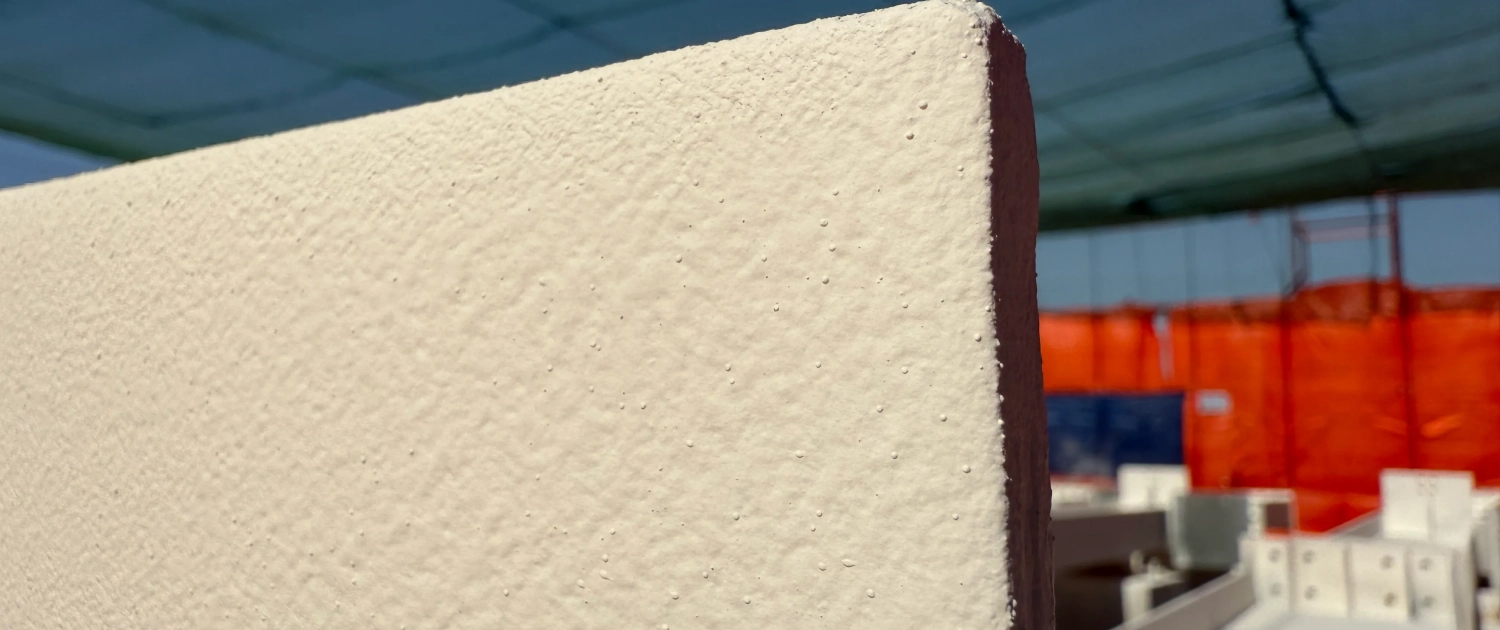
Multi-coat anti-corrosion systems that protect structural steel from rust in the UAE’s humid, salt-laden climate, applied by our certified crews to ISO 12944 specifications.
Approved








Mechanism
Steel left unprotected in the Gulf starts to rust within weeks. An anti-corrosion system seals the surface behind a sacrificial zinc-rich primer and layers of barrier coating, so moisture and salts cannot reach the metal, keeping the structure sound for decades
Specification
| Corrosivity | Typical environment in the UAE | Relative system build |
|---|---|---|
| C3medium | Inland urban areas, interior steel with some humidity | Lower |
| C4high | Industrial zones and coastal areas with moderate salt exposure | Moderate |
| C5very high | Seafront sites, ports, plants and high-humidity industrial areas | High |
| CXextreme | Offshore structures and splash zones | Maximum |
Categories follow ISO 12944-2. The exact system, number of coats and dry film thickness depend on the corrosivity category, the required durability and the manufacturer's data sheet. Send us your specification and we will confirm the system for each area.
Range
Thin-film coating that expands under heat to insulate steel and preserve its load-bearing strength, up to 120 minutes of fire resistance.
Durable spray-applied protection designed for columns, beams and heavy structural steel sections.
Fire-resistant barrier for cable trays that stops flame spread and keeps critical circuits running during an emergency.
Chemical treatment that slows combustion and preserves wood's natural look, with up to 60 minutes of added fire resistance.
Fast-curing, solvent-based intumescent system suited for exposed steel and demanding project timelines.
High-build epoxy intumescent system built for offshore, marine and heavy-duty industrial environments.
Chemical treatment for curtains, upholstery and soft furnishings to meet fire safety codes in commercial fit-outs.
Certified fireproofing paints, mortars and accessories supplied and applied to spec for steel, cable and timber protection projects.
On site
Each stage carries a hold point. Work does not move on until the previous coat is inspected and signed off, and the full record is issued to the consultant at handover.
Applications
Intumescent coatings are used as passive fire protection on structural elements — steel, timber and concrete — to delay structural collapse and hold escape routes open during a fire.
Portfolio
A record of steel protected, inspections passed, and deadlines met across the Emirates.
Why us
Manufacturer-trained crews using our own spray equipment. The people on your site are ours, not subcontracted labour.
Offices in Dubai, Abu Dhabi, Sharjah, Ras Al Khaimah and Umm Al Quwain — plus a Saudi operation, so we mobilise across the region without travel loading the price.
Dubai, Abu Dhabi and Sharjah Civil Defence, plus ADNOC, CMW, PGC and Tawazun. See our approvals
Dry film thickness recorded member by member, issued with material certificates and test reports, ready for authority submission.
Durability depends on the system and the environment. ISO 12944 sets durability ranges from low to very high, and a correctly specified multi-coat system on well-prepared steel is designed to protect for many years before major maintenance.
For most high-performance systems the steel is abrasive blasted to Sa 2½ to ISO 8501-1, checked for profile, dust and soluble salts, and primed before flash rust can form.
Yes. Intumescent and cementitious fireproofing need a compatible primer underneath. We confirm primer compatibility with the fireproofing manufacturer before work starts.
Seafront and port sites usually fall in ISO 12944 category C5, which typically calls for a zinc-rich epoxy primer, an epoxy intermediate and a polyurethane topcoat. The final system follows your project specification.
Yes. Dry film thickness and environmental conditions are recorded for every coat, and the inspection report is issued to the consultant and main contractor at handover.


