Wood Fire Retardant Treatment in the UAE
Clear and pigmented fire-retardant systems for timber linings, exposed structure and joinery — tested to EN 13501-1, BS 476 and ASTM E84, with certificates issued for Civil Defence submission.
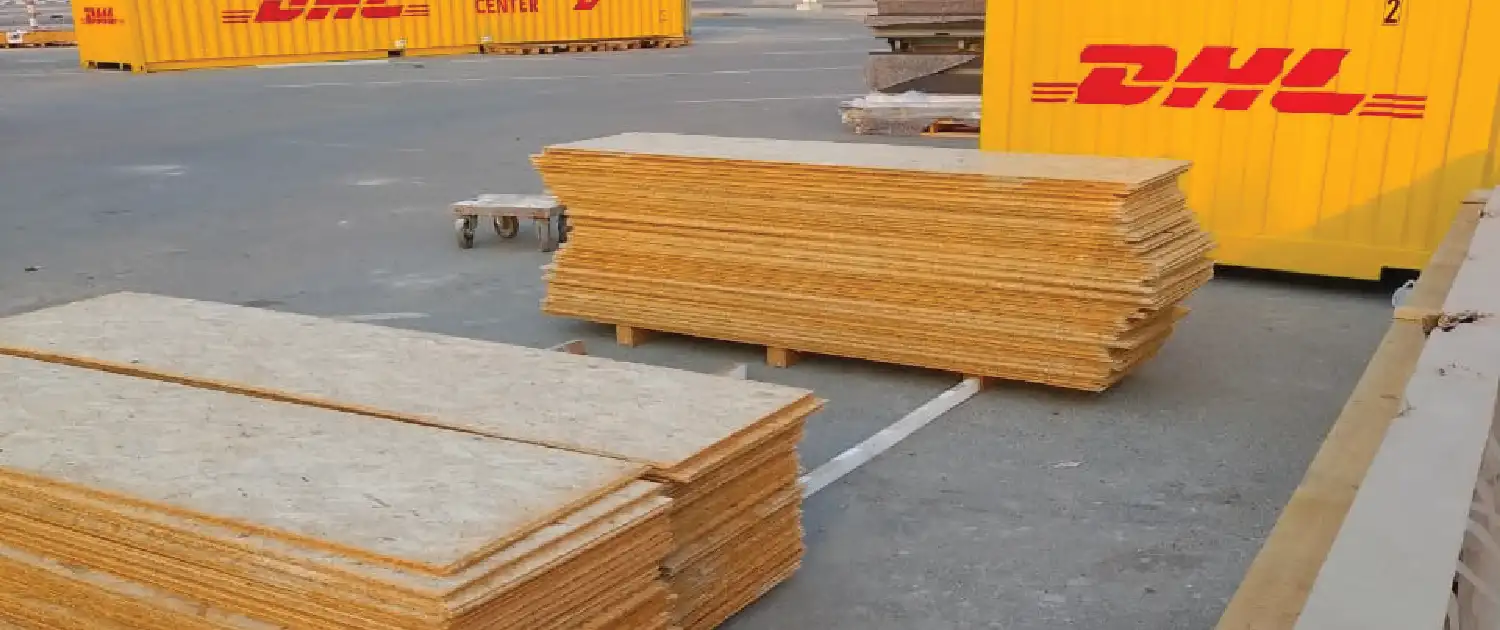
Clear and pigmented fire-retardant systems for timber linings, exposed structure and joinery — tested to EN 13501-1, BS 476 and ASTM E84, with certificates issued for Civil Defence submission.
Approved














Mechanism
Wood fire retardant is an intumescent coating applied to timber on site or in the workshop. Unlike pressure impregnation it is not forced into the fibres at a factory — it sits on the surface, and in a fire it swells into an insulating char that seals the grain and starves the flame of fuel, so fire no longer travels across the panel.
Specification
| Class achieved | Typically specified for | Relative coating build |
|---|---|---|
| D-s2,d0untreated | Timber as delivered — the baseline every specification is measured against | None |
| C-s2,d0treated | Back-of-house, storerooms and rooms where a partial upgrade satisfies the specification | Lower |
| B-s1,d0treated | Escape routes, corridors, lobbies and atria — the class most UAE fit-outs are written to | Higher |
| B-s1,d0 + EXTexterior | Cladding, pergolas and shade structures, where the system must also survive weathering | Maximum |
This table covers reaction to fire only — a class, never minutes; the minutes belong to a complete tested assembly, and no coating turns a timber beam into a 60-minute element. Euroclasses come from EN 13501-1, with Class 1 and Class 0 to BS 476 and ASTM E84 Class A as the British and American equivalents, while outdoor durability is a separate class again under EN 16755. Build shown is relative, not a specification: real loading is set in grams per square metre by the tested system and changes with the species, which is why we coat a sample panel before quoting — and note that no system will bond over timber already varnished, waxed or oiled, so those surfaces must be sanded back to bare wood. Send us your timber schedule and the class your consultant has specified, and we will return the system, the loading and the certificate it comes from.
Range
Thin-film coating that expands under heat to insulate steel and preserve its load-bearing strength, up to 120 minutes of fire resistance.
Durable spray-applied protection designed for columns, beams and heavy structural steel sections.
Fire-resistant barrier for cable trays that stops flame spread and keeps critical circuits running during an emergency.
Chemical treatment that slows combustion and preserves wood's natural look, with up to 60 minutes of added fire resistance.
Fast-curing, solvent-based intumescent system suited for exposed steel and demanding project timelines.
High-build epoxy intumescent system built for offshore, marine and heavy-duty industrial environments.
Chemical treatment for curtains, upholstery and soft furnishings to meet fire safety codes in commercial fit-outs.
Certified fireproofing paints, mortars and accessories supplied and applied to spec for steel, cable and timber protection projects.
On site
The sample panel comes first for a reason — a fire-retardant system will not bond over a timber that has already been varnished, waxed or oiled, and finding that out on a finished ceiling is expensive. The topcoat is not cosmetic: it protects the intumescent film from wear and moisture, and outdoors it is what stops the treatment leaching out of the timber and taking the certificate with it.
Applications
Wood fire retardant is used as passive fire protection on exposed timber — linings, structure, joinery and external cladding — to stop fire spreading across the surface and keep escape routes usable for longer.
Portfolio
A record of steel protected, inspections passed, and deadlines met across the Emirates.
Why us
Manufacturer-trained crews using our own spray equipment. The people on your site are ours, not subcontracted labour.
Offices in Dubai, Abu Dhabi, Sharjah, Ras Al Khaimah and Umm Al Quwain — plus a Saudi operation, so we mobilise across the region without travel loading the price.
Dubai, Abu Dhabi and Sharjah Civil Defence, plus ADNOC, CMW, PGC and Tawazun. See our approvals
Dry film thickness recorded member by member, issued with material certificates and test reports, ready for authority submission.


